
Dental implants
Bone grafting for implants.
Dental implants need healthy bone for long-term support. When bone volume is limited after extraction, long-term tooth loss, or sinus changes, bone grafting can rebuild the foundation needed for implant placement.
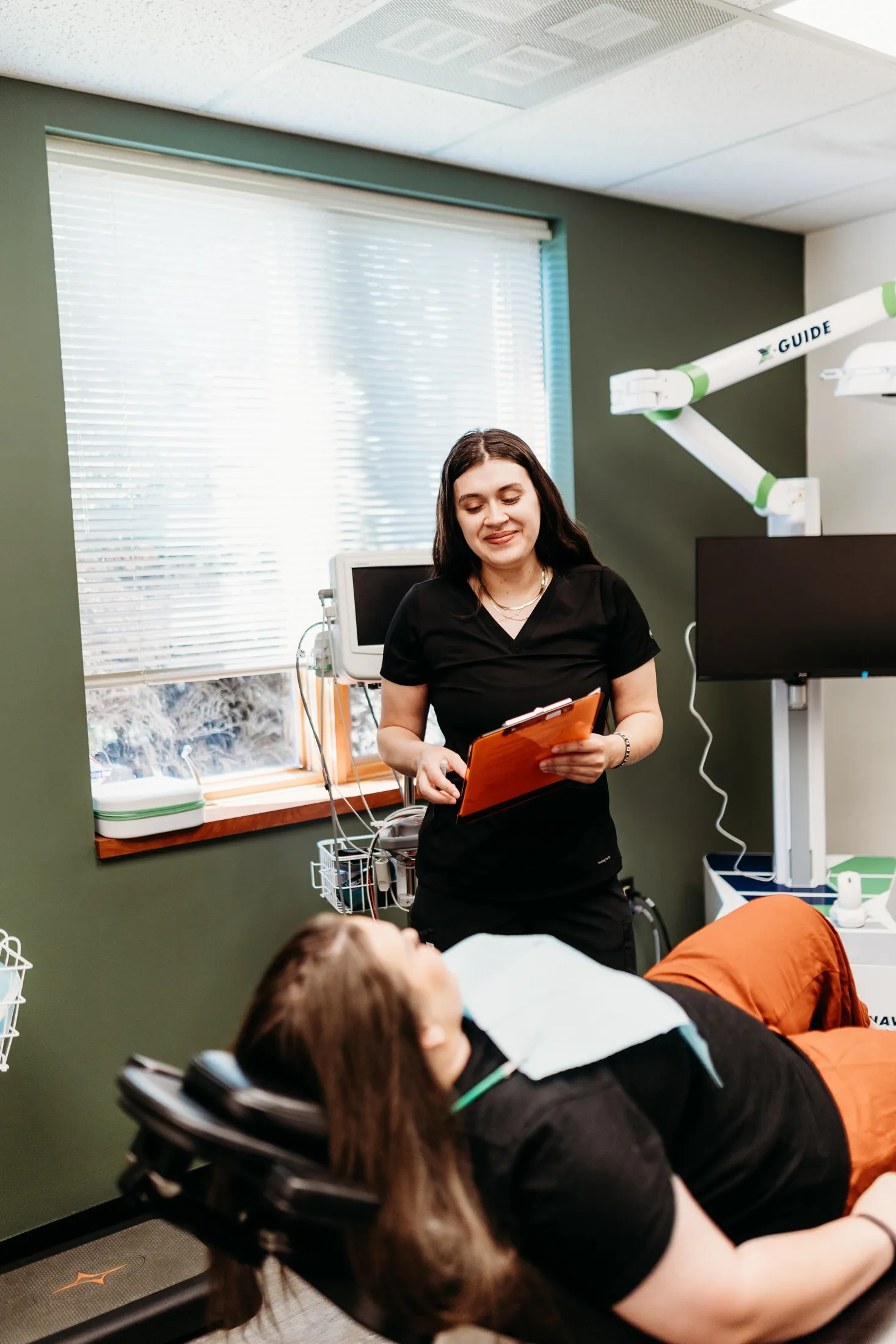
Implant foundation
Do you have enough bone
for dental implants?
After tooth extraction, thick socket walls often fill naturally with bone in two to three months. When socket walls are thin, especially near the front teeth, healing can be less predictable.
In those situations, bone grafting may be placed at the time of extraction to help your body fill the empty socket with bone. This helps maintain the width and volume needed for implant placement several months later.
Bone grafting can also rebuild areas where teeth were removed years ago and the ridge has become too thin to support an implant safely.
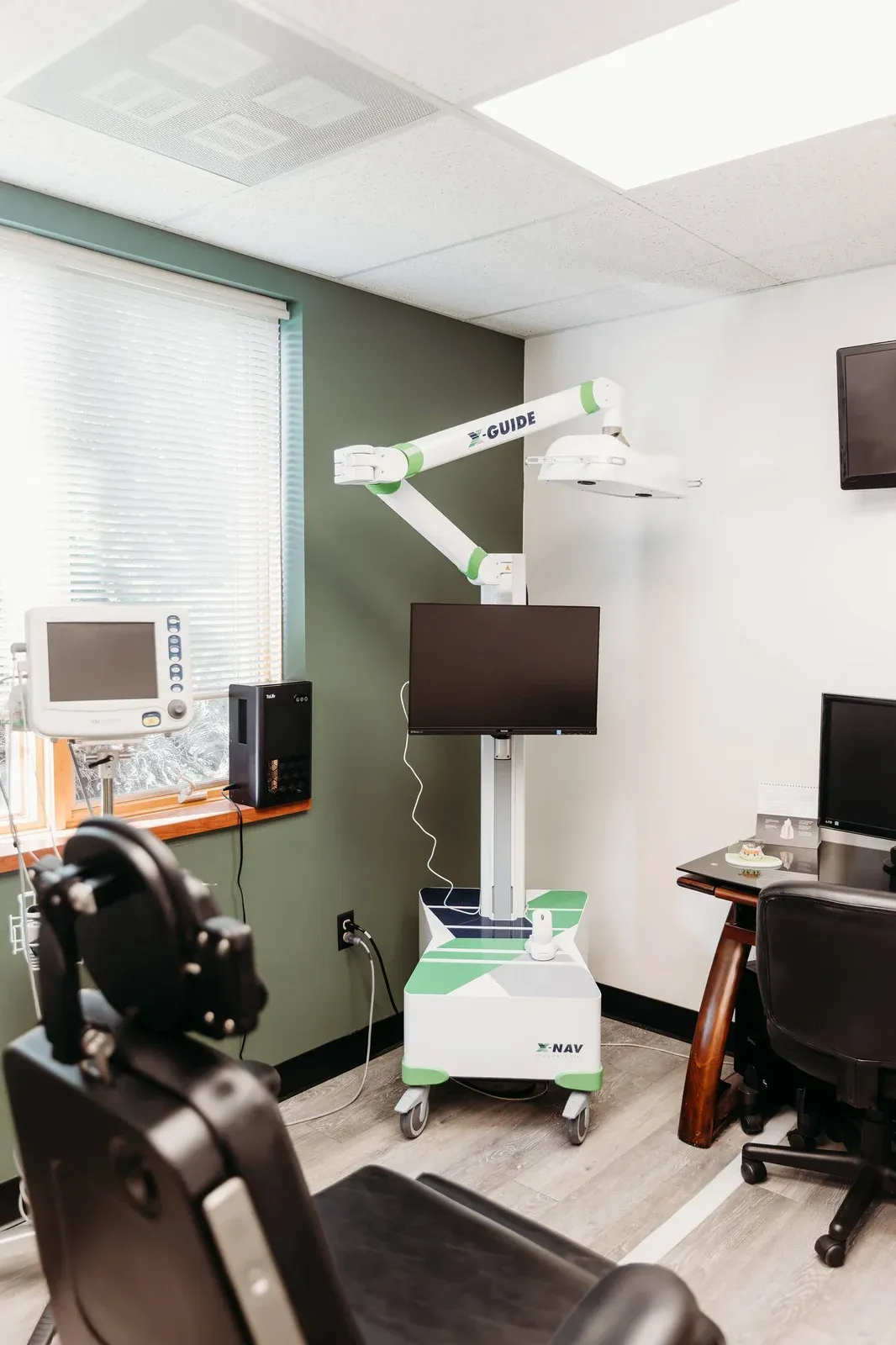
Grafting scenarios
Different bone concerns call
for different grafting plans.
Bone grafting is usually a relatively comfortable office procedure. Many different grafting materials are available, including your own bone when that is the best option.
Socket grafting
When socket walls are thin after extraction, grafting material may be placed at the time the tooth is removed to help the body fill the space with bone.
Thin ridge grafting
If a tooth was removed years ago and the bony ridge has become very thin, grafting can rebuild width and volume before implant placement.
Sinus grafting
When upper back teeth have been missing for a long time, the sinus may sit low near the implant site. Bone can be added to restore height for implants of proper length.
Implant-site preparation
Some grafts heal before implant placement, while others may be completed at the same time as implant surgery depending on anatomy and treatment goals.
Dental implants
More on
dental implants.
-
Single tooth implant
One tooth, no reshaping of its neighbors.
→ -
Full mouth dental implants
A full arch of fixed teeth on implants.
→ -
Immediate implants
Placed when the tooth is removed.
→ -
Implant dentures
Dentures that attach to implants.
→ -
Zygomatic implants
For severe bone loss in the upper jaw.
→ -
Replacing missing teeth
Compare every way to replace a tooth.
→
Benefits
Bone grafting restores options
for implant placement.
The purpose of grafting is to create enough healthy bone height, width, and volume for an implant to be placed with better support and long-term stability.
- Maintains socket width and volume
- Improves implant placement options
- Rebuilds thin jawbone areas
- Restores bone height near the sinus
- Supports long-term implant stability
Thin ridge grafting
Older extraction sites may need rebuilding.
If the bony ridge is extremely thin, grafting material can be placed beside the existing bone and allowed to heal for up to six months before the ridge is re-entered and the implant is placed.
Sinus grafting
Upper back teeth can need added bone height.
If the sinus sits low into the tooth-bearing area, the sinus membrane can be gently elevated and bone added to restore enough height for implants of adequate length.
Your surgical team
Two surgeons,
one team.
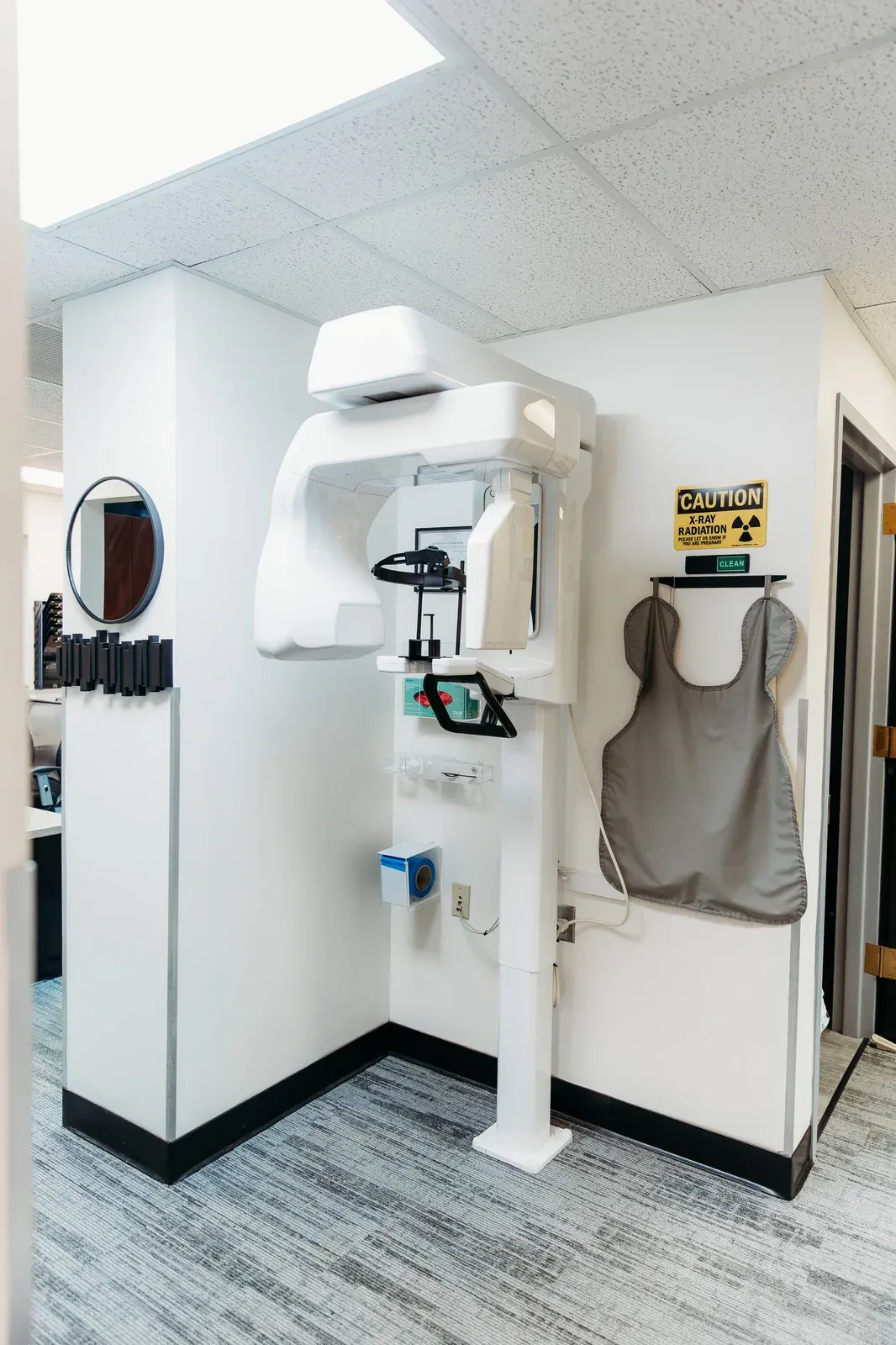
Both of our surgeons hold dental and medical degrees and plan your treatment with 3D imaging, right here in our Topeka office.


Patient questions
Questions patients
ask most.
A consultation is still the best way to get answers specific to your health and goals.
All implant questions →Why would I need a bone graft before an implant?
An implant needs enough bone width, height, and density to stay stable. Grafting rebuilds bone where it has thinned.
Does bone grafting hurt?
It is done with local anesthetic and sedation is available. Soreness afterward is usually mild and short-lived.
How long before I can get my implant?
It depends on the graft. Some implants are placed at the same visit, others after several months of healing.
Where does the graft material come from?
It can come from your own bone, a tissue bank, or synthetic materials. Your surgeon will explain the best choice for you.
Reclaim confidence
Find out whether grafting
is needed.
We will review your imaging, bone volume, and implant goals to determine whether bone grafting should be part of your treatment plan.